

Foods that lower cortisol and still hold up in human trials
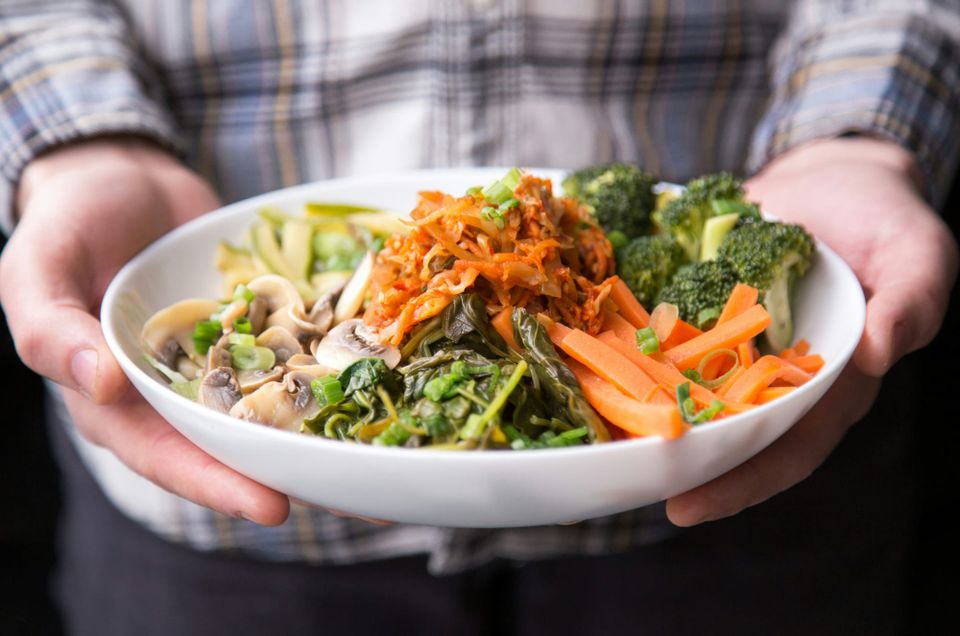
Dark chocolate, magnesium and gut health foods all get named. Human trials make the list much shorter.
Some evenings I'm tired enough to fall asleep on the sofa, while my brain has apparently started a second shift.
Tomorrow's list is running on the forefront of my mind. I'm craving something sweet. I'm wondering whether my last coffee was too late, or if my dinner was to light. Or have I simply carried the whole day into 9 pm with me?
This is usually when foods that lower cortisol start sounding like a very useful search.
The internet of course has lots of answers, like dark chocolate, a magnesium drink, vitamin C, various herbal teas, kimchi, omega 3s.
What I want to know is which of these cortisol lowering food claims survive contact with actual human trials.
First, cortisol has a useful job. In healthy adults, its levels rise around waking and gradually fall across the day, while acute stress can push the response higher. So a healthy goal is about appropriate timing and a healthy response, rather than trying to push the cortisol number lower at all times.
But when we look specifically at food research, the evidence becomes much less tidy. We get a few genuinely interesting signals, but there are also a few places where supplement research has turned into advice about individual foods, which can be a bigger leap than it sounds.
The clearest whole-food signal so far
This trial involving 294 adults compared general healthy dietary guidance with 2 Mediterranean-style diets over 18 months.
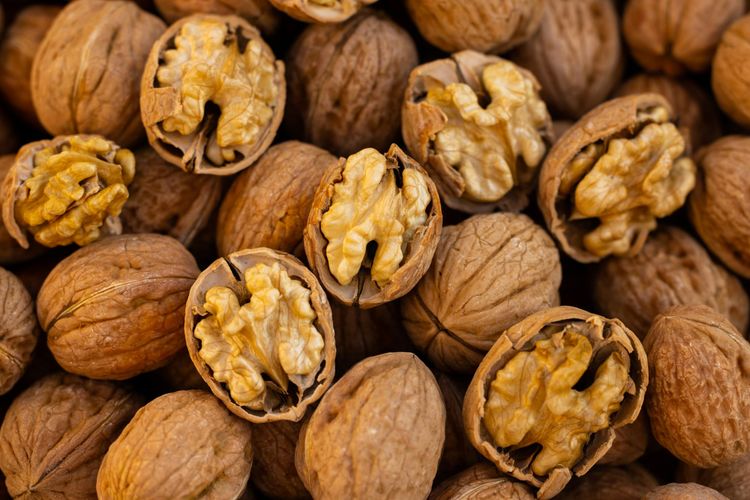
Both Mediterranean groups included 28 g of walnuts per day. The higher-polyphenol green Mediterranean group also included 3–4 cups of green tea and a daily Mankai drink.
Towards the end of the study, fasting morning cortisol fell in both Mediterranean groups. The decrease in the higher-polyphenol group was also significant compared to the general healthy diet guidance group.
I find this info much more useful than another list of 15 "cortisol foods".
The intervention worked as a whole food eating pattern over 18 months. It combined nuts and high-polyphenol plant foods, while the green-Mediterranean group also reduced red and processed meat.
So I'd take the practical message at a pattern level too.
Eating nuts, whole grains, and polyphenol-rich plant foods gives us a more defensible starting point than trying to identify 1 ingredient that switches cortisol off.
Having said that...
Dark chocolate also has direct human data
In this 4-week human study, people ate 25 g per day of either high-polyphenol dark chocolate (containing 500 mg of total flavonoids) or a control dark chocolate (w negligible flavonoids).
In the study results, their total daily cortisol and morning cortisol fell after the high-polyphenol chocolate.
The control group chocolate produced no comparable change, and mood scores also stayed similar.
The study was tiny, so let's treat this as an interesting signal; and if you can get your hands on high-polyphenol dark chocolate with high flavonoid content it's definitely worth trying.
To me, even this evidence points out more towards a pattern though: Again, to a consistent consumption of polyphenols rather than a single ingredient.
I've covered more about polyphenols here:
 Martina Gabriela
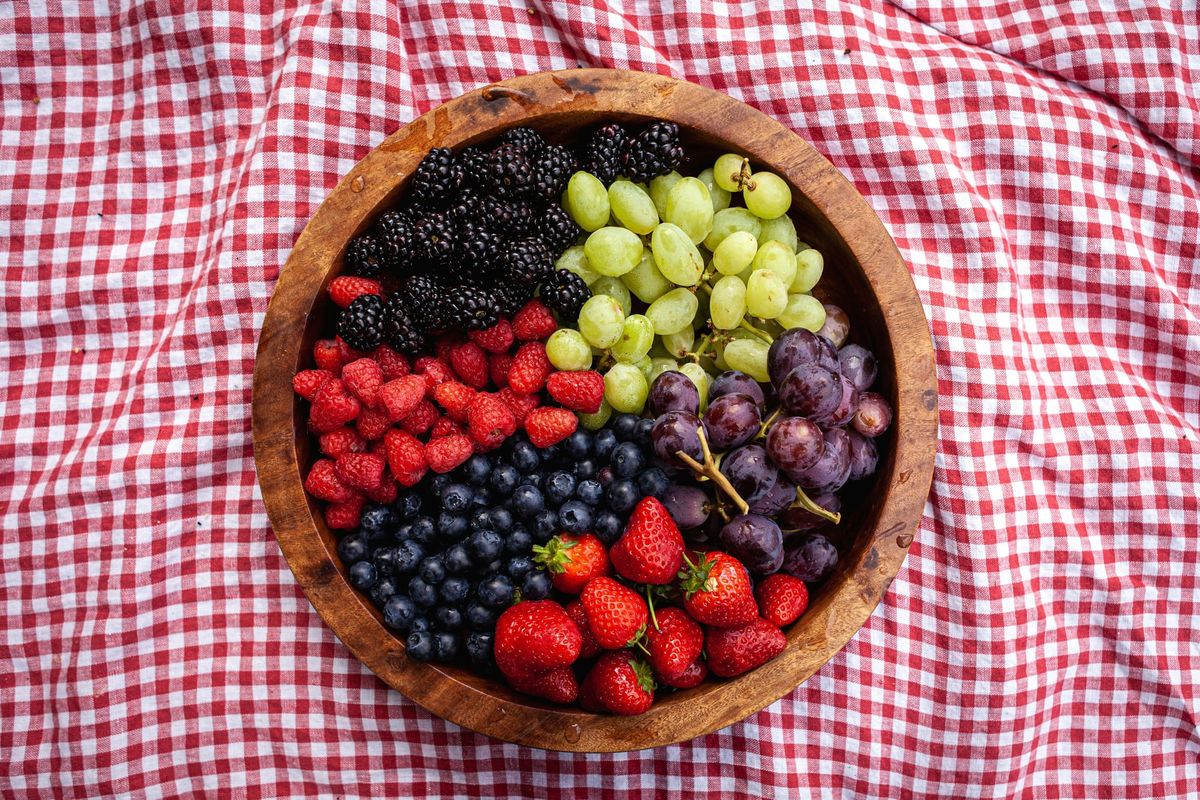
Gut health foods get interesting, then complicated
We hear about the gut-stress connection a lot, and human cortisol research does exist.
In this study, 3 weeks of a specific galactooligosaccharide prebiotic reduced the cortisol awakening response compared with placebo. But another prebiotic, of a different kind, tested in the same trial produced no effect.
Then a later trial gave participants a combination of fructooligosaccharides and galactooligosaccharides for 4 weeks. The prebiotics changed the gut microbiota, including increasingBifidobacterium. But cortisol and the other measured biological stress markers stayed unchanged.
That leaves me with a fairly simple interpretation.
Prebiotic fibre already earns its place through digestion, gut microbiome and general nutrition benefits. But the claim that ordinary gut health foods reliably lower cortisol seems to still be ahead of the human evidence.
This also depends on whether you're just feeding your gut bacteria, or also adding live microbes, which is basically what makes the difference between prebiotic and probiotic foods.
So I keep oats, legumes and other fibre-rich foods in regular rotation because they already do many other useful jobs. But I leave the cortisol promise off the packet.
Magnesium and vitamin C have human cortisol data with a catch
These are probably 2 of the nutrients I see attached to cortisol most often. Human evidence exists:
This study gave 49 adults 350 mg of supplemental magnesium per day. 24-hour measured cortisol fell, compared with placebo.
And this study in 69 women with elevated cortisol and/or DHEA-S linked with chronic stress tested 1,000 mg of vitamin C per day for 2 months. Elevated cortisol fell in the vitamin-C-treated groups.
But both these interventions used supplements.
This distinction changes what we can reasonably say about food:
Pumpkin seeds, beans and whole grains contain magnesium.
Peppers, kiwi and berries contain vitamin C.
The trials above tested concentrated supplemental doses under controlled conditions.
So this human research gives a reason to make sure those nutrients are present in my diet often, with a slightly less reason to think a bowl of spinach or an orange directly lowers cortisol.
So what can we eat with some back-up evidence?
I’d make the overall pattern do most of the work.
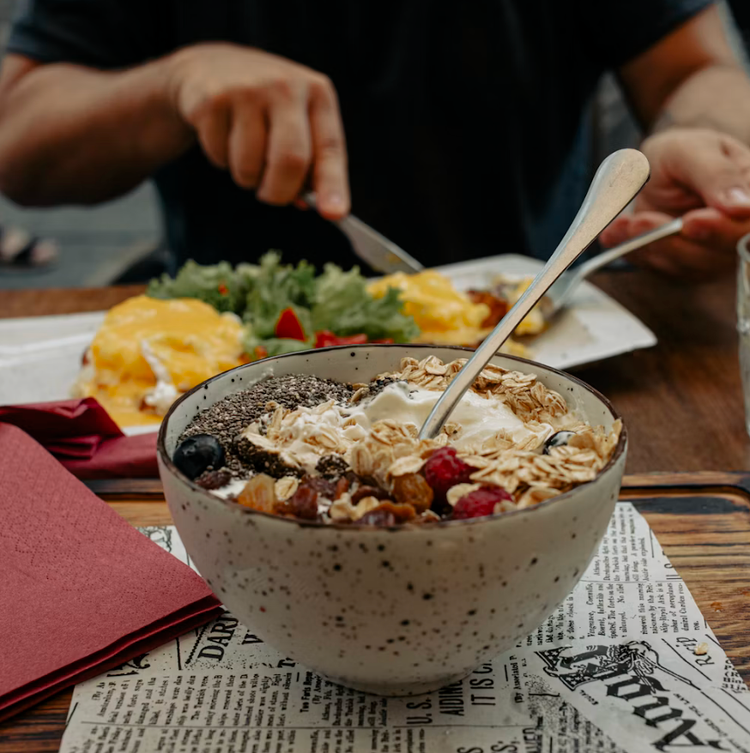
That means regular meals containing whole grains or legumes, walnuts and other nuts, and a variety of polyphenol-rich whole foods appearing routinely rather than becoming another health task to complete.
Dark chocolate has enough direct human evidence to earn an enjoyable footnote.
I’d also keep magnesium- and vitamin-C-rich foods in regular rotation because those nutrients already have clear nutritional jobs. Their cortisol studies give me an interesting additional reason to pay attention to them, rather than permission to market individual foods as stress-hormone treatments.
And I’d treat gut-focused fibre the same way: Useful habit, interesting cortisol research, evolving evidence.
Food lists tend to skip the timescale
I also wouldn’t judge whether my “cortisol foods” were working based on whether I felt calmer 20 minutes later.
The Mediterranean-diet trial lasted 18 months.
The dark-chocolate study lasted 4 weeks.
The positive prebiotic study lasted 3 weeks.
The human evidence looks much more like repeated dietary patterns influencing aspects of stress physiology over time, than food behaving like an emergency cortisol switch.
That changes how we can use this research.
We can pause looking for a specific cortisol-lowering snack and look at what we eat repeatedly.
And when stress is showing up most clearly at night in feeling tired and wired, getting hungry late, or waking when I desperately need to stay asleep, the next nearest pattern I'd double check is this:
What should my evening meal look like to support deeper sleep?
The Sleep Support Plate formula works through this exactly.
If you want fewer 3 am wake-ups and less late night hunger, the Sleep Support Plate shows you how to build a dinner that carries you through the night.
 Martina Gabriela

💫 Have a friend who needs to read this? Email this article 💌



Member discussion