

Bloating after eating healthy: 4 likely reasons, and realistic fixes
4 evidence-backed ways to reduce bloating so you can eat and get on with your day.
You add more oats, beans, vegetables, wholegrains and the other foods we’re constantly told are good for gut health.
Then your stomach throws an embarrassing protest.
It’s especially frustrating when the meal you just ate was healthy. And when meals that look much worse on paper cause you no problems.
If you often experience bloating after eating healthy, for most people these are the 4 likely reasons:
1. Your fibre went up faster than your digestion could handle
A big fibre increase can cause more bloating, even when the foods themselves are nutritious.
In this trial study of 412 adults, a diet containing 32 g of fibre a day increased the risk of bloating by 41%, compared with a lower-fibre diet.
This can happen easily when we add too much fibre at once. If your digestive system is not used to fibre and suddenly it's oats and seeds at breakfast, beans at lunch, wholegrains, more vegetables and fruit throughout the day, it's a fibre overload.
Your digestive system is overwhelmed.
Increasing your fibre more gradually will help: Change the amount first and get it closer to your baseline, rather than immediately cutting the food completely.
2. Different high-fibre foods affect you in different ways
“Fibre” covers a huge range of sources. There's also soluble and insoluble fibre, which both affect the digestive system differently.
In a recent study, people with bloating were given 2 types of fermentable fibre found in plant foods (either fructans or alpha-GOS). Only around 18% of participants reacted to type 1, and 20% to type 2.
This means: A food that makes one person bloated can sit perfectly well with someone else.
Find your current personal fibre tolerance instead, rather than going through endless lists of supposedly good or bad foods (as they can be different for everyone).
Take the 2-minute Fibre Tolerance Quiz below to see where your digestion currently sits and get a much more useful starting point:
 Martina Gabriela
3. Fermented foods
There are 2 types of fermented foods:
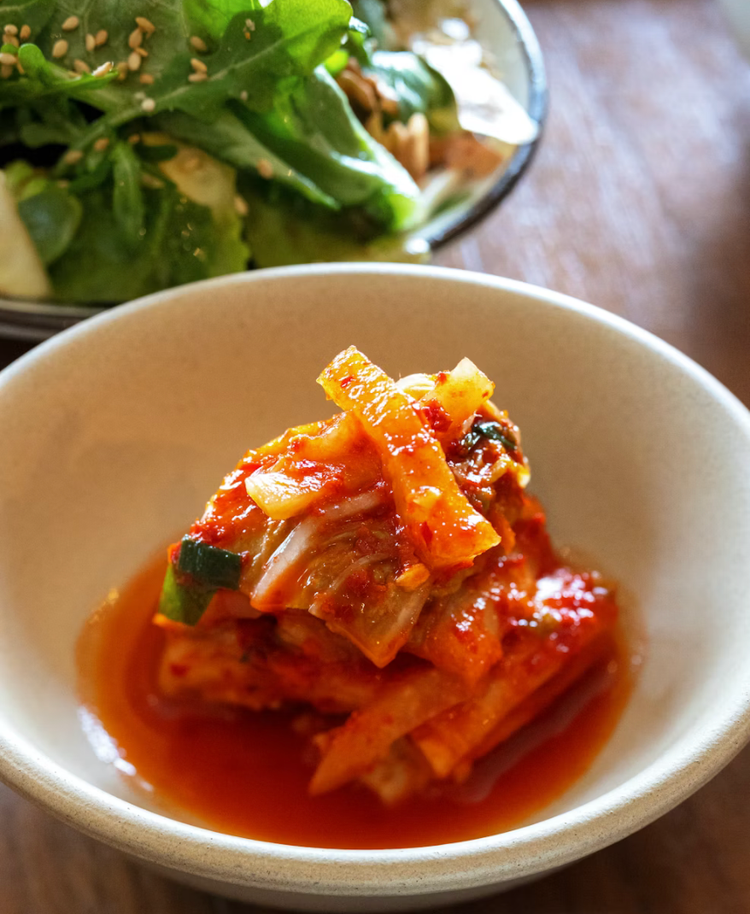
- Live-culture foods -> kimchi, sauerkraut, miso broth, yoghurts - contain gut-microbe cultures when you eat them.
The main problem here is also how quickly you increase the amount.
In this 10-week study, people eating more fermented foods increased their gut-microbe diversity and lowered inflammatory markers, but bloating also increased during the first 4-week ramp-up before settling later in the study.
- Fermented foods without live cultures, such as sourdough bread.
Fermented foods are generally good for gut health, but the original fibre and fermentable carbs can influence how we feel.
So even the best gut-health food can still be a poor fit in the wrong amount or at the wrong stage of tolerance.
A portion that feels easy for one person can be problematic if your current tolerance is lower.
4. Stress can change how the same meal feels
Food is only part of what your digestive system is dealing with on any given day.
In this crossover study, acute stress slowed down the digestive process and increased fullness and discomfort after meals.
In this specific study, the people's food stayed the same. But their digestive response changed when stress was introduced.
Most people notice a version of this response during busy weeks, heavier workloads, emotional stress, worrying in anticipation, and more.
If this sounds familiar, read more about how stress can affect digestion even when you eat well in this guide:
 Martina Gabriela

What to change first if healthy food makes you bloated
Return to baseline:
- Test your fibre tolerance,
- Reduce the number of variables, and test individual sources of fibre one by one,
- Keep the ones you seem to tolerate better, and adjust the rest:
- It could mean a smaller amount of beans, cooked vegetables instead of a huge raw salad, or just 1 high-fibre addition rather than 4 in the same day.
Then build variety back up from there.
If you want concrete practical meal examples you can use even on busy days:
The Gut Health Plate shows you how to combine fibre, prebiotic and probiotic foods around your current tolerance, so eating for gut health feels comfortable enough to keep doing.
 Martina Gabriela




Member discussion