Stress eating after a hard day: Is it hunger, relief, or both?

A 7-day way to work out what your evening eating is asking for, then change the right part.
You eat well all day.
Breakfast is fine. Lunch is healthy. You might meal-prep, get plenty of protein and fibre, and feel completely satisfied after eating.
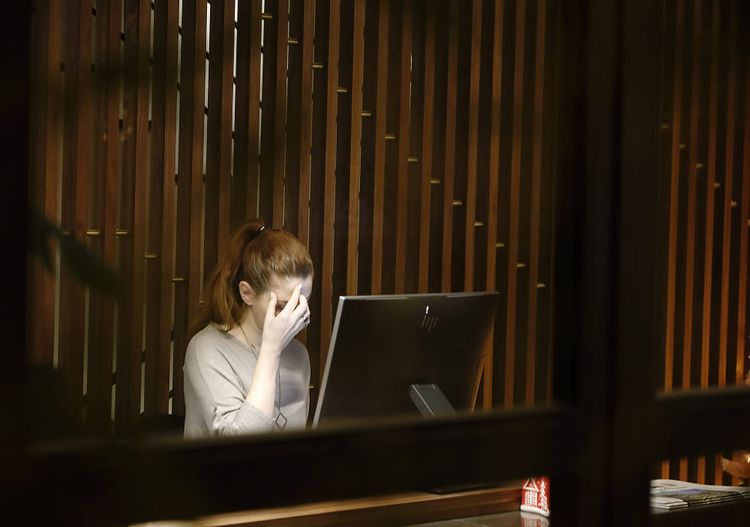
Then you get home from work and everything seems to change.
You want crisps. Then something sweet. Then you're deciding which bag of popcorn has less calories.
Sometimes you're genuinely hungry.
Sometimes you know you're not.
And food just feels like the quickest way to mark the difficult part of the day as finished.
This is one of the clearest patterns when people are stress eating:
Being good or structured all day, then feeling far less in control when work ends.
For some people, food is a reward for getting through the day, or a distraction that temporarily stops them thinking about whatever is stressing them.
There is real human evidence behind the stress—craving connection.
In this study, 123 people reported their stress and food cravings 3 times a day. Going through a stressful event was connected with stronger cravings at the same point in the day.
But this doesn't mean stress automatically makes everyone overeat.
This experiment found that a lab stress test, which increased cortisol, didn't change evening food intake in some of the participants.
So human responses to stress are clearly more complicated than "cortisol goes up, so you eat."
A more useful question is:
When you want to eat after a stressful day, how much of the urge is physical hunger and how much is the need for comfort or relief?
Because quite often it's both.
Expert quote: "When we experience workplace stress, cortisol signals the liver to flood the bloodstream with glucose. Because we're sitting at a desk rather than burning that fuel, insulin overcorrects, triggering a sharp blood sugar crash by late afternoon.
Since the brain relies heavily on steady glucose, this crash creates a biological fuel deficit, driving intense 6 pm sugar and carb cravings. Overcoming post-work stress eating is often about stabilising blood glucose during the workday (rather than willpower), reducing the likelihood of a blood glucose crash come 6 pm."
— Steph, BANT Registered Workplace Nutritionist at The Nutrition Advantage
Identify your pattern
Before changing what you eat, or changing anything else, work out which version keeps happening for you.
Answer these 4 questions:
1.) Would an ordinary meal sound good right now?
Like rice and chilli, pasta, a filled wrap, soup and bread...
If several normal foods are appealing, genuine hunger is probably contributing.
If dinner sounds uninteresting while 1 or 2 specific snacks feel urgent, reward or sensory craving may be playing a bigger role.
This is a clue rather than a perfect hunger test.
2.) Have I been too restrictive with my food / diet today?
Think about the hours before the craving, did you:
- Have a very light lunch?
- Skip your afternoon pick me up because you wanted to be good?
- Delay eating because work was busy?
- Save calories for later?
- Eat less today because you ate more yesterday?
Restriction is worth checking on carefully.
This scoping review examined 76 separate studies in detail. They found that restrictive diets were frequently connected to binge eating. Particularly when restriction occured alongside negative emotions.
(The evidence was mixed, so while a strong indicator, restriction alone can't be assumed to cause binge eating in everyone.)
That nuance matters here.
The question is whether hunger has been added to an already difficult evening.
3.) Do I want food, or do I want a particular reward?
Sometimes the message can be strikingly clear:
I finished my adult day. Now I get my food treat.
This urge may be tied to:
- Closing your laptop, wrapping up, leaving work or desk
- Finally sinking into the sofa
- Finally being alone
- Finishing childcare
- Watching tv
- Feeling exhausted after a difficult shift
- Getting through another deadline, often at short notice
Food has become part of the transition from responsible mode into off-duty mode.
There's nothing wrong with enjoying food at that point.
The useful thing is recognizing when the food, the snack, or the craving is carrying another job with it as well.
4.) What do I want this eating to change about the next 10 minutes?
This may be the most revealing answer, do you want:
- Less hunger,
- A hug-in-a-bowl kind of comfort,
- A reward for your efforts,
- A distraction,
- A way to stop thinking about work,
- A signal that the day is finally yours,
- This hard-to-describe pleasure that only this food can give you?
Sometimes the answer is even:
- All of the above.
Maybe you feel more exposed to your stress when your stomach is empty.
Maybe you're trying to lose weight but stress eating repeatedly disrupts your efforts.
Maybe you've unknowingly created a ritual-like habit that's now incredibly hard to break.
That's the overlap this guide is designed around:
Physical hunger can make the difficult moment harder ⬇️
The difficult moment can make food feel much more rewarding ⬇️
Trying to solve one side can leave the other untouched, and you end up feeling bad either way 🔁
Knowing more about what you're dealing with changes what actually helps you
If physical hunger is part of the problem, another distraction technique cannot make an under-fed afternoon disappear.
If food has become your reliable signal the stressful part of the day is over, making the snack lower in calories doesn't give you another way to switch off, and doesn't remove the dependence habit.
If both are happening at the same time, we need to deal with both.
For members, the rest of this guide turns the 4 questions into a practical 7-day system: How to protect the vulnerable hours before the craving, when an afternoon bridge helps, what to eat, and what to do when food is mainly providing relief rather than fuel.