Prebiotic Foods vs Probiotics: The best prebiotic foods for gut health (science explained)


Prebiotic foods are probably the most powerful yet underrated tools for gut health.
We often tend to confuse them with probiotics, the live bacteria in fermented plant foods and yoghurts.
But prebiotics are actually the food the probiotic bacteria need to survive.
They're the food that fuels your microbiome, so the probiotic bacteria can keep doing their good work.
If you've been spending money on probiotic supplements or kombucha, but haven't noticed real changes in digestion or energy, this is probably why:
Without enough prebiotic foods in our diet, the probiotics don't have what they need to do their job.
So let's unpack:
What prebiotics really are, why the science behind them is so strong, and which foods are the best sources of prebiotics to make a measurable difference to your gut health.
🧅 What "prebiotic" really means
Prebiotic simply means food for your gut bacteria:
Unlike probiotics, which add new microbes to your digestive system, prebiotics are non-digestible fibers that feed the beneficial bacteria you already have.
When these fibres reach your colon, they ferment. It's a natural process that produces short-chain fatty acids (SCFAs) like butyrate, propionate, and acetate.
These compounds do much more than aid digestion:
- They nourish the gut lining, keeping it strong and resilient.
- They regulate immune activity, reducing inflammation.
- They even send signals signals to the brain, influencing mood and energy.
That's why prebiotics are now being studied not just for gut health, but for metabolic and cognitive health too.
And the good news is: The strength of our gut microbiome depends more on what we feed it every day than on probiotic products or supplements.
🧅 The science behind prebiotic foods
Hundreds of studies now show that people who eat more plant-based, fibre-rich foods have a stronger and more diverse gut microbiome.
It's the diversity that matters most, because different types of probiotic bacteria prefer different types of fibre.
A 2020 review in Nutrients showed that prebiotic intake can significantly increase levels of Bifidobacteria and Lactobacilli, two of the most beneficial strains for human health.
Another systemic review found that diets high in resistant starch and inulin (both key prebiotic fibres), improved gut barrier function, reduced bloating, and enhanced digestive regularity.
In simple terms:
The more variety of plant fibres you eat, the more resilient your gut becomes.
And you don't need exotic ingredients to do this. In fact, some of the strongest prebiotic effects come from basic, inexpensive foods you already know.
Everyday prebiotic foods that actually work
Garlic & Onions
Key prebiotic: Inulin and fructooligosaccharides (FOS)
Why it works: Feeds Bifidobacteria and supports immune balance
How to use: Add raw or lightly cooked daily in meals
Bananas (slightly under-ripe, just about to ripe)
Key prebiotic: Resistant starch
Why it works: Fuels butyrate production for gut lining health
How to use: Eat a slightly under-ripe banana daily
Oats
Key prebiotic: Beta-glucans
Why it works: Improves consistency and microbial balance
How to use: Cooked oats, overnight oats, or oat bran
Apples
Key prebiotic: Pectin and polyphenols
Why it works: Supports friendly gut bacteria and lowers inflammation
How to use: Keep the peel on for maximum benefit
Chia seeds
Key prebiotic: Soluble fiber & mucilage
Why it works: Ferments to SCFAs; may support beneficial bacteria
How to use: 1–2 tbsp soaked in yogurt/overnight oats or smoothies
 Martina Gabriela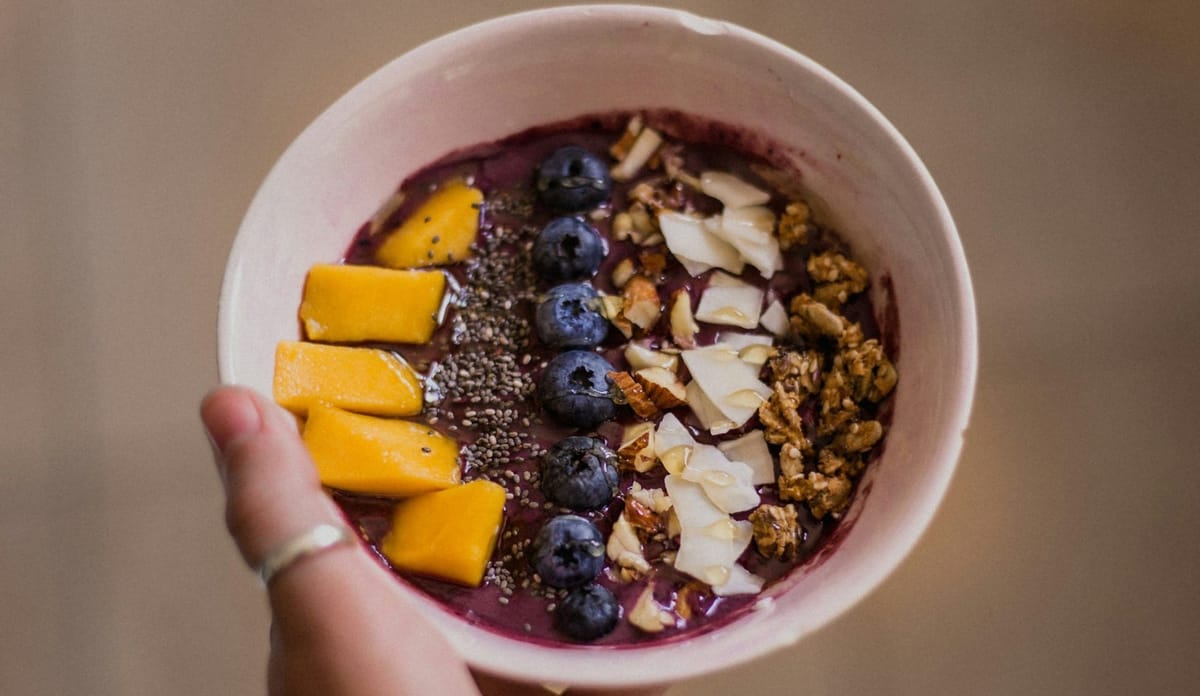
🧅 Prebiotic foods vs probiotics: Which matters more?
Since we already know probiotics are live bacteria, and prebiotics are what keeps them alive, it's clear that without prebiotics, probiotics can't do much.
A good analogy I came across: Probiotics are like seeds and prebiotics are the soil and fertilizer. If the soil is poor, no matter how many seeds you scatter, they won't thrive.
Research backs this up. In a 2023 review published in Frontiers in Nutrition, people who consumed both prebiotics and probiotics, which is a combination known in the industry as synbiotics, saw better results for digestion, mood, and immune health compared to probiotics alone.
But it was the prebiotic component that drove the majority of the improvement.
So if you want to choose one to focus on first, choose the food, not the capsule.
🧅 Signs your gut needs more prebiotic foods
- Frequent digestive pain, bloating or irregular digestion
- Fatigue after meals
- Sugar cravings or unstable energy
- Sensitivity to certain foods that used to be fine
These are common early signs your gut microbes might be out of balance or under-fed.
🧅 How to add prebiotic foods without discomfort
If you jump straight from a low-fibre diet to high prebiotic intake, you might feel some digestive discomfort first. That's normal, as your gut bacteria are waking up.
To make the transition smooth:
- Start small. Add one new prebiotic food every few days.
- Hydrate well. Fibre needs water to work and move smoothly.
- Keep variety. Aim for around 10 different plant foods a week.
- Stay consistent. The microbiome adapts slowly but rewards patience.
If fibre often backfires on you:
 Martina Gabriela
🧅 FAQ
- Q: What are the best natural prebiotic foods?
- A: Onions, garlic, kimchi, oats, bananas, apples are among the best-studied foods for supporting beneficial gut bacteria. Chia seeds studies are following close behind.
- Q: Are chia seeds prebiotic?
- A: Yes. Their soluble fibre and mucilage act as prebiotics that your gut bacteria process into SCFAs (explained below). Evidence includes in-vitro models with early human-adjacent findings, larger human trials are still limited.
- Q: Do I need prebiotics or probiotics for gut health?
- A: Start with prebiotics. Without them, probiotic foods (or supplements if you need them) don't have what they need to work and thrive.
- Q: Can I get enough prebiotics from diet alone?
- A: Yes. A diverse, plant-rich diet naturally supplies enough prebiotic fibres for most people. Supplements can be useful in specific cases.
- Q: How long does it take to feel a difference?
- A: Studies show measurable microbiome shifts within 2-4 weeks of consistent prebiotic intake.
Short-chain fatty acids (SCFAs) and what they do
Butyrate
Made from: Resistant starch & fiber
Main role: Feeds your gut lining cells, reduces inflammation, strengthens gut barrier
Propionate
Made from: Inulin and certain fibers
Main role: Helps regulate appetite and cholesterol metabolism in the liver
Acetate
Made from: Many different fibers
Main role: Supports energy balance and communicates with the brain and immune system
🧅 A healthy gut isn't built on products
It's built on patterns.
Every time we eat fibre-rich plant based foods, we feed the microbes that protect our health from the inside out.
You don't need to overhaul your diet overnight, you just need to start feeding your gut ecosystem with real food, daily.
💫 Who else do you know that needs this? Email this article 💌
 Martina Gabriela
🧅 Full citations
- Prebiotic Supplementation & Gut Microbiota – RCT Evidence (Stachowska et al., 2020), Nutrients, https://www.mdpi.com/2072-6643/12/11/3460
- NutritionFacts.org, Microbiome Topic Page, https://nutritionfacts.org/topics/microbiome
- ISAPP Consensus on Prebiotics (Gibson et al., 2017), Nature Reviews Gastroenterology & Hepatology, https://www.nature.com/articles/nrgastro.2017.75 PubMed record: https://pubmed.ncbi.nlm.nih.gov/28611480/
- Synbiotics & Health Outcomes, Umbrella/Systematic Reviews (Talebi et al., 2023; Musazadeh et al., 2023) Frontiers in Nutrition, umbrella review: https://www.frontiersin.org/journals/nutrition/articles/10.3389/fnut.2023.1178842/full
- Inulin & Gut Barrier / Immune Modulation (Sheng et al., 2023) Frontiers in Immunology (open access on PMC) https://pmc.ncbi.nlm.nih.gov/articles/PMC10449545/
- Prebiotics/Probiotics Mechanisms Overview, Frontiers in Nutrition, 2022: https://www.frontiersin.org/journals/nutrition/articles/10.3389/fnut.2022.1000517/full
- NutritionFacts.org, How to Keep Your Microbiome Healthy with Prebiotic Foods (video/article) https://nutritionfacts.org/video/friday-favorites-how-to-keep-your-microbiome-healthy-with-prebiotic-foods/
- Chia Seed Mucilage / Prebiotic Effects, In-vitro & Encapsulation Context Viability & mucilage details (open access PMC excerpt within): https://pmc.ncbi.nlm.nih.gov/articles/PMC12300352/
- Broader Prebiotics Review Touching SCFAs & Barrier Function (Smolinska et al., 2025), Journal of Clinical Medicine, https://www.mdpi.com/2077-0383/14/11/3673
Plant Based Edit shares evidence-based information only and is not a substitute for medical advice. Always consult your healthcare provider before making dietary or supplement changes. Read the full disclaimer here!