
Processed vs. ultra-processed foods: What to know (and key myths)

If you've been trying to eat healthier, you've probably heard this a million times (including from me):
- Avoid ultra-processed foods. Eat whole foods.
Simple in theory.
But if you're just starting out, confusing in practice.
Because most foods we eat are processed in some way.
So, is bread bad?
Are all processed foods a problem?
And what actually makes a food worth avoiding?
This is where many people get stuck, not because they're doing it wrong, but because the definitions aren't as clear as they seem.
First, the definitions (this clears up most confusion)
Nutrition research often uses the NOVA classification, which splits foods into 4 groups based on processing level:
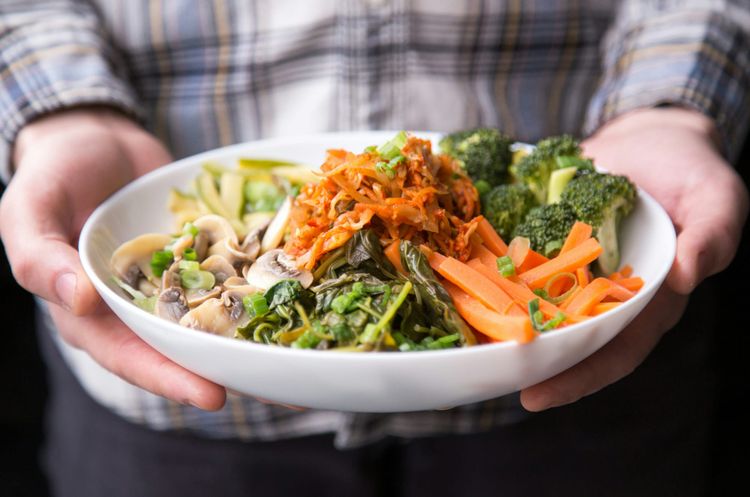
- Whole or minimally processed foods → foods close to their original form (whole, raw, lightly cooked, lightly steamed)
- Processed culinary ingredients → extracted from foods (oils, butter, sugar, natural sweeteners, syrups)
- Processed foods → whole foods with added ingredients and pre-prepared components, or precooked to be a microwaveable meal
- Ultra-processed foods (UPFs) → industrial formulations and engineered foods made from extracted ingredients far from the source, often including additives, artificial flavourings and refined components
This is often misunderstood
Processing itself isn't the problem.
Things depend heavily on the type of processing.
And most importantly, how far the processing goes, and what gets added or removed along the way.
For example:
- Frozen vegetables → processed, but still nutrient-rich.
- Wholegrain bread or sourdough bread → processed, but still full of fibre and in case of sourdough also probiotics.
- Protein bars, breakfast drinks, or meal replacement drinks → ultra-processed and high in refined and engineered inputs, even when marketed as healthy.
This distinction is the one to remember if you're focusing on making healthier choices through the day.
What research actually shows
Large reviews consistently find that higher intake of ultra-processed foods links to worse health outcomes.
Some examples:
- A major BMJ umbrella review linked higher UPF intake to increased risks across multiple outcomes, including cardiometabolic and mental health conditions,
- A large cohort study showed that higher UPF intake was associated with a 62% higher risk of all-cause mortality (at the highest intake levels, meaning eating UPFs only),
- Many systematic reviews consistently link UPF intake with obesity, cardiovascular risk and metabolic risk.
But here's where nuance matters
Not all processed and ultra-processed foods are the same.
Some foods classified as processed or ultra-processed still provide useful nutrients, including:
- Fortified plant milks (organic versions are less processed),
- Wholegrain packaged foods and snacks (wholegrain fibre bars and protein bars),
- Some legume based ready-made products.
These can still fit into a well-informed, balanced diet.
So the idea that all ultra-processed foods are bad under all circumstances, also isn't accurate.
So, how does it all work in practice?
Instead of focusing purely on labels, a more useful question is:
What function is this food serving in your overall diet?
Because most of the negative outcomes come from patterns where ultra-processed foods:
- Displace fibre and nutrients-rich whole foods,
- Reduce overall nutrient density and variety,
- And increase intake of saturated fats, sugars, and artificial additives.
Not from one specific food on its own.
The simplest way to think about it
You don't need to eliminate processing.
You just need to make sure that:
- Whole and minimally processed foods form the foundation.
- Some functional processed and ultra-processed foods sit around that, as and when your schedule or lifestyle requires them.
But not the other way around. That's where people's problems begin.
If you're unsure where to start
Use these as stepping stones:
- Build meals around whole foods first,
- Use processed foods where they help (bread, healthy oils, simple staples, wholegrain carbs),
- Be extra selective with ultra-processed foods, especially the ones that are easy to overconsume, or are likely to create cravings.
This alone puts you in the line with what research consistently shows.
The bottom line
Some of the confusion comes from thinking in categories.
But your body responds to patterns, and to bioavailability of nutrients.
And the pattern that works best according to researchers is:
- A diet anchored in whole foods, supported by simpler processed foods, with ultra-processed foods used sparingly and only when they have at least some nutrients to add.
So, not perfect. But well-informed and structured.
If you are eating relatively well but something still feels off, try this quick check to help you figure out what might be going on:
 Martina Gabriela
💫 Have a friend who needs to read this? Email this article 💌



Member discussion